Welcome to 2025 PICTURE BOOK CLUB
WEEK ONE
How to participate in 2025 Picture Book Club …
-
Get the suggested books from your library or bookstore (local or online). See 2025 PICTURE BOOK CLUB BOOK LIST for the complete list of books for each week.
-
Before reading each of the weekly books to your child, READ FIRST “What Adults Can Learn from This Story.”
-
Read one or both books to your child as many times through the week as your child wants to hear them and you have time to read.
-
Consider doing whatever activities you think are appropriate for the age and maturity of your child from “Make This Story Come Alive for Your Child.”
-
WE WELCOME FEEDBACK ABOUT YOUR PARTICIPATION. YOU CAN LEAVE A COMMENT BY USING THE “WHAT DO YOU THINK?” BUTTON AT THE BOTTOM OF THIS POST.
A DUCK SO SMALL by A.H. Benjamin
(a story about being appreciated and capable)
In A DUCK SO SMALL the big ducks say to little duck Duffle, “A duck so small can do nothing at all!” Duffle thinks sadly, “I may be small, …, but there must be something I can do.” Duffle tries unsuccessfully time after time to do all the things that other animals can do. Then, when a baby duckling needed to be rescued, Duffle was the hero because he was just the right size. “A duck so small can do something after all!” said one duck. And, although Duffle said, “Oh, it was nothing,” he knew it was quite something!
What Adults Can Learn from This Story
-
-
Some adults think self-esteem is “too soft and fluffy,” and it encourages self-centeredness and feelings of entitlement. It is true: There is much too much overindulgence and entitlement going on in families, but too much emphasis on self-esteem is not the problem. The problem is understanding what self-esteem is. Children who expect everything to be handed to them and not to be held responsible for their behavior do not have high self-esteem, no matter how full-of-themselves they may seem.
-
Self-esteem is the foundation for healthy, happy, successful children – and adults. For that statement to be true, self-esteem must be defined as to what it IS and IS NOT. Self-esteem is 1) deeply believing one is worthwhile and cared about – just for who one is, 2) deeply believing one can do things well, take care of oneself, and live with others following necessary rules and expectations, and 3) balancing one’s positive beliefs about oneself as a person with those about what one is capable of doing. Self-esteem is not giving complements that you don’t really mean, letting people off the hook of responsibility, or never allowing a person to be sorry or sad.
-
Children naturally want to learn to DO things. They want to become more and more independent. This includes wanting to know the rules, what the consequences are for not following the rules, and that they can make up for things they do wrong and get back into good graces when they mess up.
-
Children may think, act, and say they want to be the center of the universe and allow others to meet their every need, but those that are treated this way are not happy, healthy, or successful children. Neither will they likely be happy, healthy, or successful adults later on. to build self-esteem, children need lots of messages that tell them they are important no matter what, they can learn things and are expected to do so, and adults will help them learn what they need to know to grow up and be independent.
-
Make this Story Come Alive for Your Child
-
-
Ask your child how she thinks the duck so small felt both before and after the rescue. Ask her if she ever has felt those ways.
-
Ask your child if there are things he wishes he knew how to do. If there are, think of ways he can begin to learn how. It might be just researching that is required. If he wants to play T-ball, he might start by just learning about the game. Or if he is ready, break the task down into manageable parts and begin teaching one part at a time. Let him do that part long enough and often enough to get it down pat and then move to a next step.
-
Find as many ways as possible to say or act out the following messages with your child:
-
I enjoy you and want to be with you.
-
-
-
I enjoy you when you are quietly just being you.
-
I enjoy you just as much when you are busy and into everything.
-
I love to watch you grow and learn to do new things, including how to follow rules.
-
(Messages adapted from GROWING UP AGAIN, Jean Illsley Clarke and Connie Dawson.)
-
MY GRANDMA LIVES IN FLORIDA by Ed Shankman
(a rhyming story about what makes grandparents great)
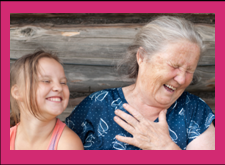
MY GRANDMA LIVES IN FLORIDA is about a young gator’s visit to see his grandma. It is much like a travel brochure. Its best features are its rhyming words, descriptions of the state of Florida, and praise for grandparents. Don’t be surprised if you find yourself or your child repeating parts of the book again and again because rhyme “…remains in our brains for all time!” And, rhyming words are “ … the best way a thing can be
What Adults Can Learn from This Story
-
Grandparents are great because …
-
They shower children with hugs and kisses.
-
They think children are funny.
-
They are willing to do fun things as many times as children want them to.
-
They love children with no strings attached.
-
They let children know that they are “the best thing” in their whole entire day.
-
They encourage children to grow up, so they teach them new things and let them do things their parents might not think they can do.
-
They take time to explain things, how things work, and why things are the way they are.
-
They are funny.
-
They tell family stories and exaggerate them and show old pictures and home movies to make children laugh.
-
They like to talk to children. They think everything children say is interesting.
-
They like to be asked questions.
-
They get excited for children’s accomplishments, sad about their disappointments, and always encourage them.
-
-
It is worth celebrating any grandparents (real or adopted) who do great things for children. Children need as many people in their circle of love as possible. The more there are the better it is.
-
Friends and other family members of the grandparent age can also do great things with and for children. They just need to be invited into the “family circle.”
Make This Story Come Alive for Your Child
-
Share with your child what was great about your grandparents.
-
Ask your child what makes his grandparents great. Write a note, make a telephone call, or make a visit to share with the grandparents your child thinks they are great.
-
Pick 3 or 4 things from the “Great” list above and ask your child which one he likes the best and why.
-
Invite friends, neighbors, and family members of the grandparent age to join you and your child for a walk, lunch or dinner, or just for a chat over lemonade. Let them get to know your child had let him get to know them.
-
Talk with your child about where their grandparents live. What state. Where it is on a map. What birds, animals, fish, and fun places for kids there are where they live. Do the same for the state your child lives in.
-
Ask your child if there are other states or countries they are interested in and search out picturebooks about them from the library or information from the Internet.

