We hope these activities will lead to some quality time for you and the kids you care about.
Quality time happens when we least expect it, often around the smallest and least expensive events. You can’t schedule it. It doesn’t take a lot of time. Instead, it takes a lot of small moments. Be prepared to be surprised by many “magical” moments while doing our summer activities. If you fully tune into your child, you and your child can make an amazing connection.
A Special Announcement before getting to the Activities: My daughter and I have published our very first picture book: Three Chilly Sheep, a playful story about nurturing resilience and problem-solving. We would be honored if you would take a look, share it with others, or add it to your home, classroom, or library collection. [To purchase on Amazon: click here]. If you decide to purchase the book, it would be most helpful, if you would leave a review. [To leave a review: click here]. That’s important for helping others to find the book on Amazon’s massive site.
ACTIVITIES
1. Let’s play “Feeling Faces.”

Play a feeling faces game. You can find examples on the Internet. (Search for “feelings faces games.”) You can purchase a game you discover, use one available online, or get ideas about how to make a homemade version.
2. Let’s play ball. Teach your child to play ball against a wall. For younger children, use a nerf ball. For older children, if the weather permits, use a hand-sized rubber ball against the house or garage door outside. If you’re rained in, try bouncing against a basement wall. Count how many times your child catches the ball. Catching in a row is the most difficult, but you can make it easier by counting catches over a certain period of time. Make the time pretty short for younger children or those new to the game. For older children, spell words with a letter for each catch. With more than one player see who can spell a whole word without missing a catch. Make it harder by letting one person be the thrower and the other person be the catcher (and speller). This would be a lot like playing H-O-R-S-E in basketball.
3. Let’s have an un-birthday party. 
Have an un-birthday party for yourself, your child, other family member, a pet. Let your child
help prepare the party. You can include ideas from THROUGH THE LOOKING GLASS by Lewis Carroll where the “unbirthday” party idea started. You can sing “The Unbirthday Song” from the ALICE IN WONDERLAND movie.
4. Let’s read nursery rhymes.
Read your child some nursery rhymes – even if he seems to have “outgrown” them. You can 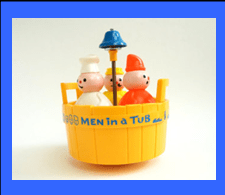 find them in library books or on Internet sites. For younger children, have them do an art project about one they like. They can draw, paint, make a sculpture, or make up a song or dance. For older children, ask them what they think the nursery rhyme meant when it was written, or what they think it could mean if someone wrote it today. For example, what could the water stand for that Jack and Jill went up the hill to fetch? Who could the three men in the tub be and what were they doing there?
For more activities see:
Summer Activities #1
Summer Activities #2
Summer Activities #3
Summer Activities #4
Summer Activities #5
Summer Activities #6
Summer Activities #7
Summer Activities #8


You must be logged in to post a comment.