Welcome to the 2026 SUMMER PICTURE BOOK CLUB – WEEK ONE
How to participate in Picture Book Club …
-
Get the suggested books from the library or bookstore (local or online). See 2026 PICTURE BOOK CLUB: COMPLETE LIST OF BOOKS for the list of books suggested for each week.
-
Before reading each of the weekly books to your child, READ FIRST “Things to Think About.”
-
Read one or both books to your child as many times through the week as your child wants to hear them and you have time to read.
-
Consider doing whatever activities you think are appropriate for the age and maturity of your child from “Making the Story Come Alive.”
WE WELCOME FEEDBACK ABOUT YOUR PARTICIPATION. YOU CAN LEAVE A COMMENT BY USING THE “WHAT DO YOU THINK?” BUTTON AT THE BOTTOM OF THIS POST.
YOU ARE LOVED by Sujean Rim
(a story about love)
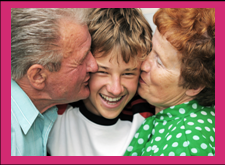
YOU ARE LOVED is about the many things that prove children are loved, but most of all, that they are loved by the person reading the book to them.
Things to Think About
-
When children are loved with no strings attached, they know they can count on that love. No matter if they follow all the rules all the time. No matter if they win or lose the game. No matter how they look. No matter what they can or cannot do.
-
What love with no strings attached looks like …
-
Loving your children just because they are your children, alive, and deserving of love and respect.
-
Teaching your children the skills they need to become independent and get along in the world without you.
-
Having high expectations of your children, so they can learn to be sure of themselves and hopeful about their future.
-
Teaching your children how to make up for their mistakes, so they know they will always be loved. Teaching them to do more than just say they are sorry. Teaching them how to do something to take care of any person they hurt.
-
Saying no in a straightforward way when you need to. Making sure your discipline is about protecting and teaching your kids rather than punishing them.
-
-
What strings attached looks like …
-
Requiring too few age-appropriate rules which will prevent children from learning how to get along in the world and stay out of trouble.
-
Not insisting on consequences for bad behavior which will encourage children to expect to be let off the hook and not learn about responsibility.
-
Protecting from sadness and disappointment which will prevent children from learning to deal with difficult feelings.
-
Giving too many “yeses” and privileges which leaves children not sure they are safe and worried about who will protect them from the consequences of their mistakes.
-
-
One part of love is caring for and caring about your children just because they are who they are. They don’t have to be good at doing things or at following rules to earn this part of your love. They deserve it just because they came into this world.
-
A second part of love is about teaching your children to be independent and capable of taking care of themselves. This is the part they do earn every time they learn skills, follow rules, or pay consequences for not following rules. They earn this love one step at a time. They make mistakes along the way, but no matter how difficult or slow their path is they deserve to be patiently taught, and they deserve to have adults stick with them always expecting them to be successful in the end.
-
Unconditional love or loving no matter what does not mean excusing or ignoring bad behavior. You can love your kids but not love their behavior. To love them in a balanced way you must show them you love them regardless of their behavior while still firmly teaching them and correcting their bad behavior.
-
Too often unconditional love is mistaken for “anything goes.” Because parents want to be sure their children feel loved, they think they cannot expect too much of them. They think they need to save their children from hard things in life like learning in school, doing chores and following rules. The truth is that unconditional love means balancing love no matter what with teaching good behavior and independent skills. Your love does not depend on your children’s success, so it is unconditional in that way, but it must always go hand-in-hand with high expectations for good behavior and success in order to be good for them.
Making the Story Come Alive
-
Children need as many people in their circle of love as possible. The more there are the better it is.
-
Sit with your child and make a list of all the people who love him. Let him suggest some, and you suggest some. You can both talk about how you know each person loves him.
-
Have your child use art to describe how he knows each person loves him (draw, paint, sculpt, sing, dance, etc.)
-
Plan a celebration about how lovable your child is.
-
Suggest your child make his own “Circle of Love.” She can draw it, paint it, make it 3-dimensional, act it out in a dance, sing a song about it, sculpt it out of play dough, bake a cake decorated as a circle of love, etc.
-
Help your child’s Circle of Love expand. Be on the lookout for friends and other family members who are of grandparent age. Ask yourself: “If those folks had a chance to get to know my children, would they love them the way I want grandparents to love them?” If your answer is yes, invite those folks into your family. Include them in outings, family meals, and family celebrations.
-
Love with no strings attached or unconditional love can help your child be a better student and rule follower.
-
Loving a child and disciplining a child is an inseparable duo. Neither can be effective without the other.
-
When children believe they are loved and will be cared for (by parents, caregivers, and teachers) even if they don’t get A’s on their report card and even if they mess up and get in trouble. they are strong enough to keep trying to get that “A” and to keep trying to stay out of trouble. On the other hand, when children think they have lost the love of the important people in their lives, they can easily give up and just accept that they are “dumb” or are “mess-ups.”
___________________________________________________________
KATIE AND THE PUPPY NEXT DOOR by John Himelman
(a story about sharing)
In KATIE AND THE PUPPY NEXT DOOR, Sara Ann told Katie, “You should share your things with your friends. That’s what makes having friends fun.” Katie “did not want to share her things. They were HER things.” Eventually, Katie and Ruby began playing tug-of-war with a toy. “This is fun! thought Katie as they spun in circles.”
Things to Think About
-
When sharing is only about being polite and mannerly, a child must decide, “I will be unhappy in order to be good.”
-
When sharing is also about generosity, a child must decide, “I have enough and even
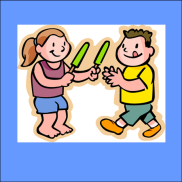 sometimes more than enough, so I am willing to share.” To make that decision, children need to know that when they share, their basic needs will still be met (like having their favorite blanket or toy). Adults can teach children the important life skills of politeness and manners while also teaching them how to get their needs met. By creating win-win situations, the child who is sharing and the child who is receiving both can get their needs met.
 -
Children who have too much have the most difficulty sharing. They don’t realize they have plenty to share. Instead, when children have too much they learn to want more and more. They never believe they have enough to share.
Making the Story Come Alive
Make playtime a win-win situation.
-
Set up two play zones in your home. Make one be a “sharing play zone” for children to play together. Make the other one be a “personal play zone” for when your child wants to play alone or just wants to feel safe and peaceful with the things around him that are special to him. These zones do not have to be large. They both could be in one room with each zone set apart with a curtain or separated by how the furniture is arranged. Or, the personal zone might be in the child’s bedroom and the sharing zone in a family room or basement area.
-
Have your child separate his toys into the two zones. He needs to understand that the things in the sharing zone are available for him and other children to play with. On the other hand, those in the personal zone will be off limits to other children – to his brothers and sisters, to neighbors, or to other guests that might come to visit. If your child is very young, you may need to help with the decisions about which toys to select for the personal zone. He may not realize what it will be like to have other children playing with his brand new or very special toy.
-
You will also need to help your child at any age understand when she has “enough” toys in the personal zone. You can set a limit for her. “You can have five toys in this zone.” Or maybe, “You can have however many toys will fit on this one shelf.” Give her opportunities to switch out toys if needed. There might be a day when a particular toy is of special interest to her. Also, every so often, have a clean-up session when you make new decisions about what belongs in each zone based on changes in ages and interests.
-
If you are going somewhere else to play, select only toys from the sharing zone to take with you. Make sure your child understands that the rest of the toys in both zones will be left safely at home for him to play with when he returns. The one exception to this is that comfort items (for example, bear and blanket) will need to go with a child even though they are not for sharing. Agree ahead of time that if your child needs those items while you are away from home, he can have them while sitting with you. When he wants to be off playing with others, those items will stay safely with you.

